Impact at a Glance
Workforce capacity, measured in outcomes.
Recruiting speed, labor capacity, and financial impact.
The Situation
At Star Protection, recruiting was directly tied to operational capacity.
Security contracts required positions to be staffed continuously, but the hiring process routinely took several weeks from candidate identification to deployment. Every unfilled position created downstream consequences: existing employees worked additional overtime, managers and directors filled open posts themselves, recruiting teams struggled to keep pace with demand, and contract performance became increasingly dependent on an already stretched workforce.
The underlying problem was therefore larger than recruiting.
It was a workforce-capacity problem.
I began redesigning the hiring operation around one primary objective: dramatically reduce the amount of time between identifying a viable candidate and getting that person successfully hired and deployed.
The Problem
Traditional recruiting processes were not moving fast enough for a high-volume security environment.
A vacancy did not simply represent an open requisition. It represented hours that still had to be worked by someone. When those hours could not be filled by a new employee, they frequently became overtime for an existing employee, a supervisor, or even an operational leader.
This created a measurable relationship between recruiting performance and operating expense.
The organization needed:
- Faster candidate processing and hiring decisions.
- Greater recruiter accountability for monthly hiring volume.
- Additional recruiting capacity beyond the formal recruiting team.
- Better employee retention after hire.
- Faster ways to hire multiple candidates simultaneously.
- A workforce-continuity strategy capable of responding to the rapidly changing operating environment created by COVID-19.
What I Changed
I redesigned the recruiting process and operating model with an emphasis on speed, accountability, incentives, and measurable business impact.
The result was a reduction in the hiring cycle from several weeks to less than one week, representing an improvement of more than 80% in time-to-hire.
But accelerating the workflow itself was only one part of the strategy.
Recruiter Performance Incentives
I developed a commission-based recruiting incentive program built around market-specific hiring requirements.
Each recruiter received an individualized baseline hiring target based on the staffing needs of the markets they supported. Once the recruiter exceeded that baseline, they became eligible to earn a $200 commission for each additional hire, subject to a defined monthly maximum.
The structure intentionally avoided paying incentives merely for achieving expected performance. Recruiters were expected to reach their baseline targets as part of their role; commissions rewarded production above the level the organization already required.
The program became an ongoing part of the recruiting operating model and remained in place throughout my tenure. Depending on hiring volume, the organization generally paid approximately $7,000 to $9,000 per month in recruiter commissions.
Those incentive costs were substantially offset by the operational savings generated from filling positions faster. During significant staffing periods, reduced vacancies contributed to approximately $20,000 to $40,000 per month in avoided overtime and related labor expense, with the financial benefit of each successful hire continuing into subsequent weeks and months.
The economic model was straightforward: Pay a controlled incentive for incremental hiring performance rather than repeatedly pay premium labor costs because positions remain vacant.
Turning the Entire Organization Into Recruiters
The recruiter incentive program improved production within the recruiting team, but the scale of the staffing challenge required a larger recruiting network.
I developed a separate, temporary employee-referral incentive that was available across the entire organization.
Employees could earn a $1,000 bonus for referring an individual who was hired and remained employed for more than 90 days.
The 90-day requirement was intentional. Through analysis of security-work retention patterns, I identified approximately 90 days as the critical point after which employees were significantly more likely to remain with the organization. The incentive therefore rewarded employees not merely for generating applicants or hires, but for helping identify people who were likely to become sustainable members of the workforce.
This effectively transformed the organization into an extended recruiting team.
Recruiting was no longer confined to HR. Security officers, supervisors, managers, directors, and other employees had a direct financial incentive to identify people within their own networks who could successfully fill open positions.
The program generated approximately $33,000 in referral-bonus payouts during its temporary run.
One of the most telling examples came from an operational director who earned approximately $7,000 through successful referrals. More importantly, the employees brought into his operation allowed him to reduce his own overtime requirements essentially to zero.
That illustrated the underlying business case exceptionally well: the referral bonus was a one-time acquisition cost, while an unfilled position could generate overtime expense week after week.
Financial Impact
The recruiting transformation used incentive compensation deliberately rather than simply adding recruiting expense.
The organization invested approximately $7,000 to $9,000 per month in recruiter commissions during my tenure, while a separate temporary employee-referral campaign paid approximately $33,000 in total bonuses.
Those programs helped accelerate hiring, consistently achieve monthly staffing targets, and reduce reliance on overtime.
During periods of significant staffing demand, the reduction in vacancies generated estimated labor savings of approximately $20,000 to $40,000 per month, with additional residual savings continuing into later periods as newly hired employees remained in their positions.
The important measurement was therefore not the gross amount paid in recruiting incentives.
It was the difference between the controlled, finite cost of acquiring employees and the recurring premium cost of leaving positions vacant.
Hiring Events
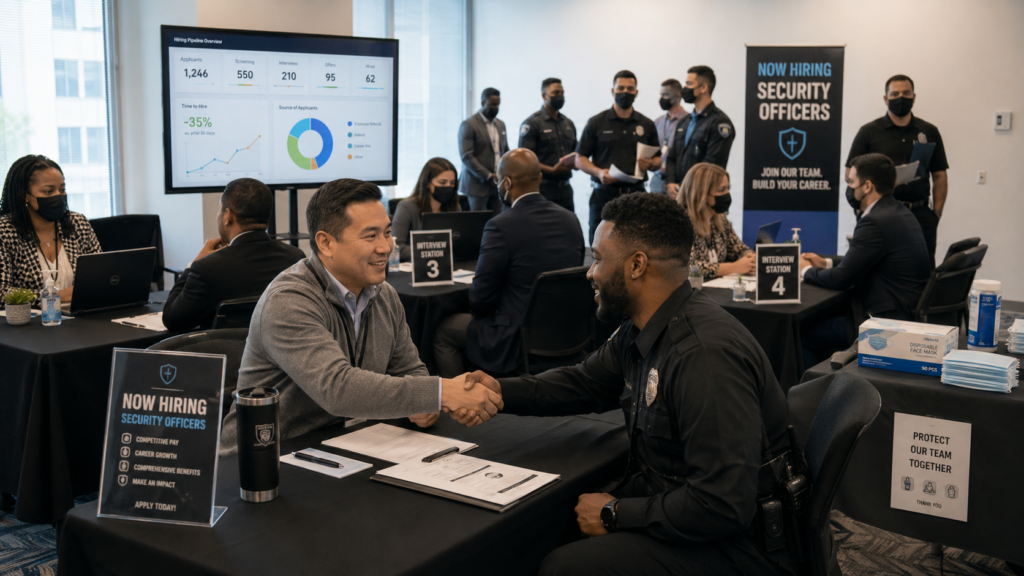
I also pioneered a high-volume hiring-event model designed to compress multiple stages of the recruiting process into a single day.
Candidates moved through a round-robin process allowing different portions of the hiring workflow to occur concurrently rather than sequentially.
To increase attendance and create additional excitement around the event, we incorporated a raffle for a new PlayStation 5—a highly sought-after product at the time.
Approximately eight employees were hired through one of these events in a single day.
In the previous hiring environment, producing that number of completed hires could have required one to two weeks.
The event demonstrated that hiring speed was not simply a function of recruiter effort. The architecture of the hiring process itself could be redesigned.
Workforce Continuity During COVID-19
The workforce challenge became significantly more complex as COVID-19 changed the operating environment.
Because of my previous safety experience, I anticipated early that personal protective equipment (particularly masks) would become both a safety requirement and a potential operational bottleneck for the security industry.
Before global demand produced widespread shortages and substantial price increases, I purchased and secured an inventory of masks for the organization.
That decision helped preserve uninterrupted staffing capability when PPE became difficult for many organizations to obtain.
For a security company, workforce continuity had direct contractual significance. If employees could not safely report to client locations, uncovered posts could rapidly become overtime expenses, operational failures, or threats to client retention.
Maintaining adequate PPE availability contributed to uninterrupted client service while avoiding what I estimate would otherwise have been approximately $3,000 to $5,000 in additional overtime expense during affected weeks.
GetVaxAccepted
By late 2021, another workforce-continuity challenge was emerging.
Clients - particularly healthcare organizations, large property-management organizations, and organizations operating in regulated environments - were increasingly imposing vaccination-related requirements on vendors and contracted personnel.
Security employees could therefore be qualified and available to work while still being ineligible to access a particular client site unless their vaccination status or approved accommodation could be verified.
At the same time, commercial products addressing this problem were emerging at significant per-user subscription costs.
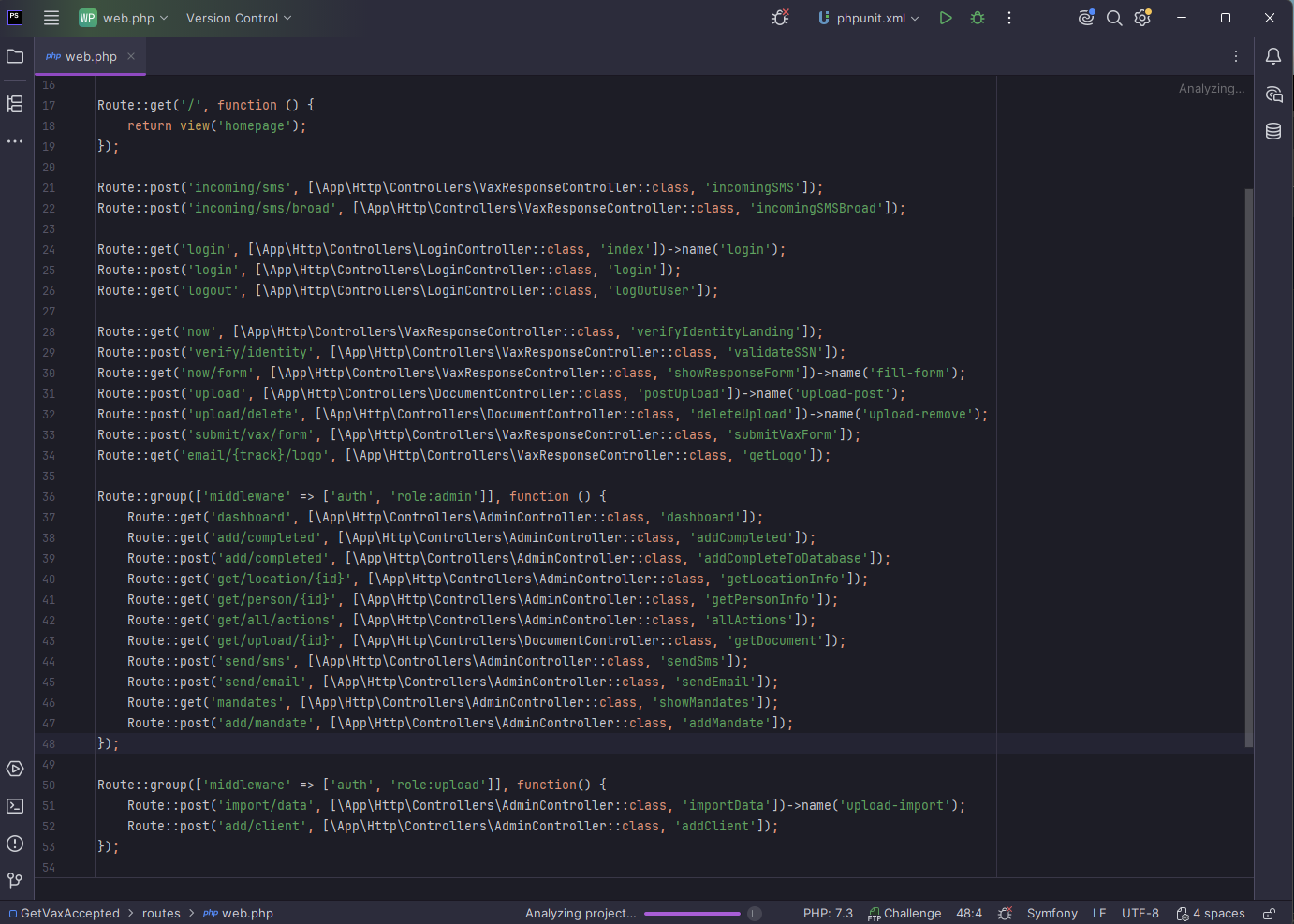
Instead of purchasing another platform, I repurposed technology I had previously developed as part of an internal system called Vision.
I tore down and reengineered portions of that platform into a new application called GetVaxAccepted.
The system provided a secure workflow for vaccination-record verification while separating access based on role and business need.
The platform allowed the organization to:
- Collect and verify vaccination documentation through a controlled process.
- Segment sensitive health information from ordinary operational data.
- Restrict access according to role and need-to-know requirements.
- Allow authorized client representatives to confirm employee eligibility without exposing underlying medical documentation.
- Track workforce eligibility against client requirements.
- Incorporate religious-accommodation workflows into the same operating framework.
- Preserve deployment flexibility as requirements differed among clients and jurisdictions.
This allowed Star Protection to respond rapidly to client requirements without purchasing an expensive per-user commercial compliance platform.
More importantly, it helped preserve access to critical client sites at a time when compliance requirements could directly determine whether an employee could work.
For a contract security organization, that translated into avoided overtime, greater schedule flexibility, stronger contract continuity, and reduced risk of failing to meet client staffing requirements because qualified employees could not be verified quickly enough.
The Outcome
What began as an effort to accelerate recruiting became a broader workforce-continuity strategy.
The hiring process was reduced from several weeks to less than one week-an improvement of more than 80%.
Recruiter incentives aligned hiring activity with market demand while consistently driving performance beyond minimum staffing targets.
Employee referral incentives expanded recruiting capacity across the organization and rewarded successful, retained hires rather than simply applicant generation.
Hiring events demonstrated that multiple hires could be completed in a single day instead of over several weeks.
The temporary enterprise-wide referral program paid approximately $33,000 in bonuses, while the ongoing recruiter commission program helped consistently drive hiring above baseline targets. Together with the redesigned hiring process, these initiatives contributed to estimated labor savings of approximately $20,000 to $40,000 per month during periods of significant staffing demand, with additional savings continuing as vacancies remained filled.
Early PPE procurement protected staffing continuity during shortages and helped avoid additional overtime.
And when vaccination requirements created an entirely new workforce-access challenge, I converted my own technology platform into GetVaxAccepted, giving the organization a purpose-built method to verify employee eligibility, protect sensitive information, support religious accommodations, and maintain service to clients operating under increasingly complex requirements.
The common thread across each initiative was the same: